 简体中文
 English


Why does the underflow of the hindered settling machine alternate between thick and thin?
release time:
2026-11-04
In the wet classification of quartz sand, the hindered settling machine achieves particle size separation by means of an upward water flow, and stable underflow concentration is the prerequisite for ensuring classificati
In the wet classification of quartz sand, the hindered settling machine achieves particle size separation by means of an upward water flow, and stable underflow concentration is the prerequisite for ensuring classification accuracy. However, many customers find that the underflow concentration fluctuates: when it is high, the discharge valve nearly clogs; when it is low, the underflow is as thin as water, which then affects the subsequent pressure filtration or dewatering processes. The problem usually lies in the coordination of three links: the upward water flow, the feed rate, and the discharge valve.
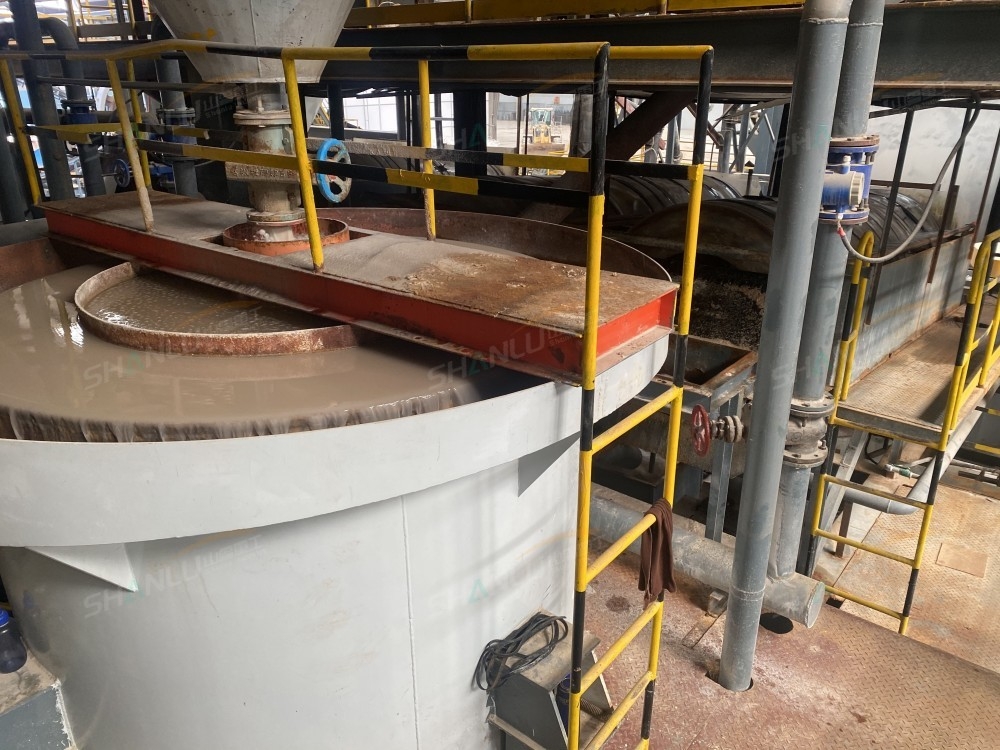
If the upward water flow pressure is unstable, the underflow concentration will jump accordingly. When the inlet water pressure fluctuates, the upward water flow velocity varies, and the settling state of fine particles changes accordingly. When the pressure is too high, fine particles are washed back into the overflow, resulting in a lower underflow concentration; when the pressure is too low, fine particles settle into the underflow, resulting in a higher concentration. It is recommended to install a pressure gauge on the inlet water pipeline and keep the water pressure stable within the range of 0.1-0.2 MPa. When the water pressure fluctuates greatly, check the upstream water pump and valves, and install a pressure stabilization tank if necessary.
If the feed rate fluctuates, the underflow concentration will likewise be unstable. When the upstream feed suddenly increases, the material volume in the tank increases, the underflow discharge cannot keep up, and the concentration rises; when the feed decreases, the underflow becomes thinner again. Add a buffer tank before the settling machine to control the feed rate fluctuation within ±10%. Test the feed concentration and flow rate once per shift, and promptly inspect the upstream equipment when fluctuations exceed the standard.
If the discharge valve opening is fixed, it cannot adapt to changes in operating conditions. When the underflow concentration changes, the discharge valve still maintains the same opening; if the concentration is high, the material cannot be discharged, and if the concentration is low, the discharge is too thin. It is recommended to adjust the valve opening promptly based on the underflow concentration test results, or to use an automatic control valve linked with a concentration meter. If the valve is worn and does not close tightly, the underflow concentration will also become uncontrollable. Check the wear of the valve core and valve seat once a quarter, and replace them promptly if severely worn.
During daily inspections, sample and test the underflow concentration every 2 hours. If it is found to be consistently high or low, troubleshoot in the following order: first check the water pressure, then the feed rate, and finally the discharge valve. If you encounter problems during equipment operation, you are welcome to contact the Shandong Shandong Heavy Industry technical team for communication: Manager Zhang 13583776655 (same on WeChat).
label:
Next
related news


E-mail:
Hotline:
cell phone:
Copyright © 2012-2026 Shandong Shanlu Heavy Industry Technology Co., LTD All rights reserved 备案号:鲁ICP备2020040039号
