 简体中文
 English


Why does the hydraulic classifier produce coarse overflow when the front-end feed fluctuates?
release time:
2026-11-03
In a wet quartz sand production line, the hydraulic classifier processes slurry from upstream grinding or scrubbing, and a sudden increase in feed volume is a common operating condition. When upstream equipment is adjust
In quartz sand wet processing lines, hydraulic classifiers handle the slurry coming from upstream grinding or scrubbing, and a sudden increase in feed rate is a common operating condition. When upstream equipment is adjusted or has insufficient buffering capacity, a large volume of slurry rushes into the classifier, causing coarse particles in the overflow and fine particles in the underflow at the same time, and classification performance collapses instantly. The root cause is that feed fluctuations exceed the classifier's adjustment capability.
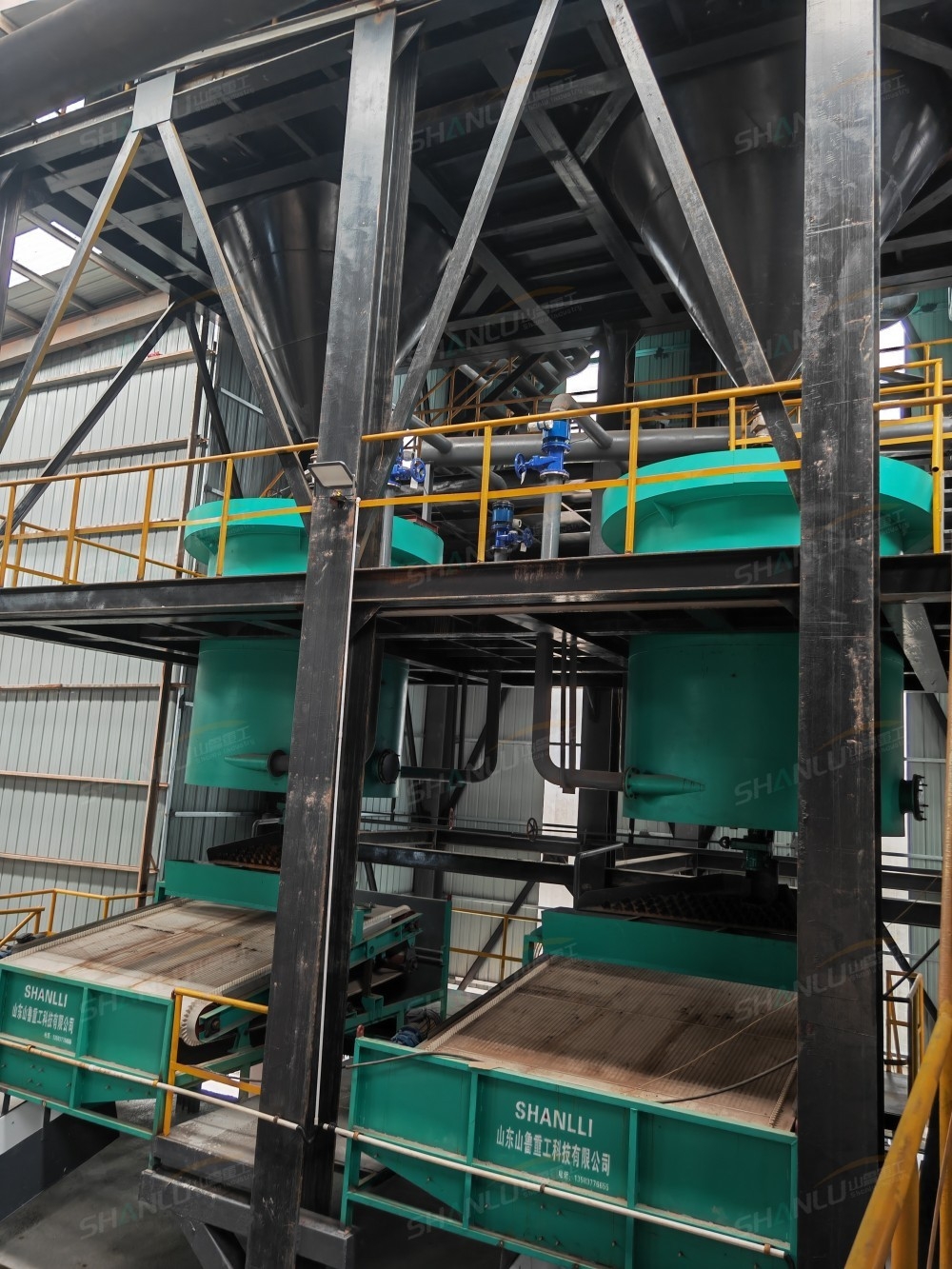
When the feed rate surges, the upward water flow velocity is relatively insufficient, and coarse particles are carried into the overflow before they can settle. The classifier's upward water flow is set for the normal feed rate; after a sudden feed increase, the slurry's residence time in the tank shortens and coarse particles do not settle sufficiently. This shows up as increased overflow density and a marked increase in coarse particles in the overflow. The emergency response is to temporarily open the inlet water valve wider to increase the upward water flow velocity while monitoring changes in overflow density. The fundamental solution, however, is to add a buffer tank ahead of the classifier to keep feed fluctuations within ±10%.
A sudden feed increase also means underflow discharge cannot keep up, and the tank level rises. Screw lifting capacity is limited; after a large volume of material rushes in, underflow discharge cannot keep pace, the tank level rises, the screw blades become more deeply submerged, and motor load increases. Check whether the operating current has risen significantly; if it exceeds the limit, appropriately reduce the upstream feed rate and restore it after the level falls. If the level frequently rises, it indicates the classifier's processing capacity does not match the upstream process, and consideration should be given to increasing equipment size or adding a second unit operating in parallel.
When feed density fluctuates at the same time, classification performance is even harder to control. An increase in feed rate is often accompanied by density changes; when density is high, slurry viscosity is greater and settling resistance increases, further reducing classification accuracy. It is recommended to install a density meter and flow meter at the classifier inlet to monitor feed conditions in real time. When density is high, add water appropriately to dilute; when density is low, reduce water addition, keeping feed density stable within a reasonable range.
In daily operation, record the feed rate and classification performance every shift, and when feed fluctuations are frequent, prioritize solving the buffering problem. If you encounter equipment operation problems, you are welcome to contact the Shanlu Heavy Industry technical team: Manager Zhang 13583776655 (same on WeChat).
label:
Next
related news


E-mail:
Hotline:
cell phone:
Copyright © 2012-2026 Shandong Shanlu Heavy Industry Technology Co., LTD All rights reserved 备案号:鲁ICP备2020040039号
