 简体中文
 English


Why does the discharge from the jaw crusher get coarser and coarser even though the discharge opening has never been adjusted?
release time:
2026-11-20
In the front end of a quartz sand production line, the jaw crusher handles the coarse crushing task, and its discharge particle size directly determines the load of subsequent grinding or sand making. Many customers enco
In the front end of a quartz sand production line, the jaw crusher handles coarse crushing, and its output particle size directly determines the load on downstream grinding or sand making. Many customers encounter a strange phenomenon: the discharge opening adjustment device has already been set to the minimum position, yet the output still contains a large amount of oversized coarse particles, and the amount of returned material on the screen remains high. The problem is often not the adjustment device itself, but jaw plate wear—an easily overlooked factor.
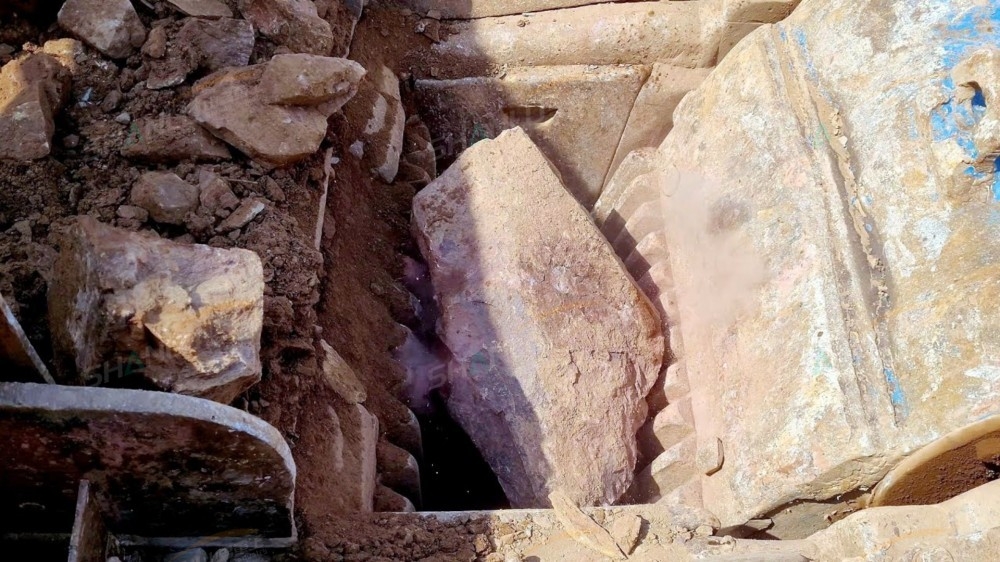
Once the jaw plate teeth are worn flat, the actual discharge opening becomes noticeably larger than the set value. The discharge opening size of a jaw crusher refers to the distance between the tooth peaks of the two jaw plates. New jaw plates have sharp teeth with distinct peaks and valleys, so the output matches the set discharge opening. After several months of operation, the tooth peaks gradually wear flat, the valleys are filled by material, and the jaw plate working surface becomes smooth. At this point, although the discharge opening value shown by the adjustment device remains unchanged, the actual minimum gap between the two jaw plates has quietly increased. Measured data show that in the later stages of jaw plate tooth wear, the actual discharge opening can be 5–8 mm larger than the set value, and the proportion of oversized particles in the output rises noticeably.
When jaw plate wear is uneven, the discharge opening is inconsistent across the width. When feeding is biased to one side, that side's jaw plate wears faster, forming a wedge-shaped gap across the width of the crushing chamber—tight on one side and loose on the other. Material leaks directly from the loose side, so the particle size is naturally coarser. During inspection, use calipers to measure the actual discharge opening gap at multiple points across the width of the crushing chamber. If the deviation exceeds 3 mm, the jaw plate wear is uneven, and the feed distribution must be adjusted or the jaw plates replaced.
Loose or displaced jaw plates can also change the actual discharge opening. Jaw plates are fixed to the jaw bed with wedges or bolts. After long-term vibration, fasteners loosen, a gap appears between the jaw plate and the jaw bed, and the jaw plate shifts slightly backward during crushing, increasing the actual discharge opening. During each shutdown for maintenance, check the jaw plate fastening bolts and wedges, and tighten them evenly in a diagonal sequence. If material is embedded in the contact surface between the back of the jaw plate and the jaw bed, the jaw plate will also not seat properly. Thoroughly clean the contact surface before installation.
To determine whether the jaw plates need replacement, do not rely only on wear time; use calipers to measure the actual tooth peak height. When the tooth peaks have worn away more than one-third of their original height, even if the discharge opening is adjusted to the minimum, the output particle size can no longer be controlled within the set range. If you encounter problems during equipment operation, you are welcome to contact the Shanlu Heavy Industry technical team: Manager Zhang 13583776655 (same on WeChat).
label:
Next
related news


E-mail:
Hotline:
cell phone:
Copyright © 2012-2026 Shandong Shanlu Heavy Industry Technology Co., LTD All rights reserved 备案号:鲁ICP备2020040039号
