 简体中文
 English


Why do scrubber liner plates wear through in less than six months?
release time:
2026-11-16
The wear-resistant liner on the inner wall of the scrubber tank is a key barrier protecting the tank body, but many customers report that the liner wears through in less than six months, leaving the steel plate of the ta
The wear-resistant liner on the inner wall of the scrubbing machine tank is a key barrier protecting the tank body, but many customers report that the liner wears through in less than half a year, leaving the tank steel plate directly exposed to quartz sand erosion, which quickly leads to pits and even wear-through and water leakage. Replacing the liner is time-consuming and labor-intensive, but not replacing it risks scrapping the tank. The problem usually lies in the liner material, impeller clearance, and fastening method.
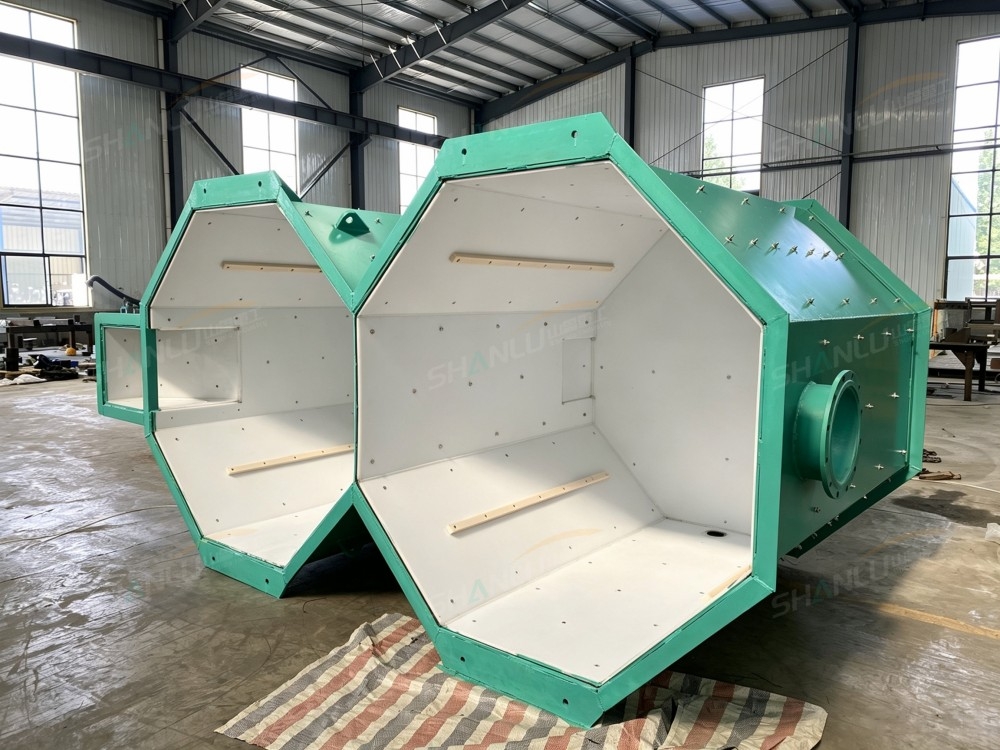
Choosing the wrong liner material doubles or triples the wear rate. Ordinary rubber liners have clearly insufficient wear resistance under the repeated erosion of quartz sand particles. Polyurethane liners have two to three times the wear resistance of rubber, and high-alumina ceramic liners are even better; the appropriate material can be selected according to scrubbing intensity and material particle size. When processing materials with a high content of coarse particles, it is recommended to give priority to polyurethane or ceramic liners. Although the unit price is higher, the overall service life is long and the replacement frequency is low, making it more cost-effective in the long run.
If the clearance between the impeller and the liner is too large, the material will scour the liner at high speed within the gap. The standard clearance between the outer edge of the impeller and the tank liner should be controlled between 5-8mm. When the clearance is too large, the slurry forms a strong vortex between the impeller and the liner, and sand particles repeatedly impact the liner surface, greatly accelerating wear. Measure this clearance once a month during shutdown, and when it exceeds the standard, adjust the impeller position or replace worn parts. When the impeller itself is severely worn, its dynamic balance deteriorates and it deflects during operation, which also aggravates local wear on the liner.
If the liner fastening bolts are loose, the liner will lift and be directly impacted by the material. The liner is fixed to the inner wall of the tank with countersunk bolts. After long-term vibration, the bolts loosen, gaps appear between the liner and the tank body, and sand particles penetrate the gaps and repeatedly squeeze them. Once the liner edges lift, they are directly scoured by the high-speed material and quickly break and fall off. During each shutdown maintenance, check the fastening bolts one by one, and replace bolts with severe countersunk head wear. When installing a new liner, the bolt heads should be sunk below the liner surface to avoid direct wear by the material.
During daily inspections, use an ultrasonic thickness gauge to check the liner thickness once a month, and arrange replacement when the wear exceeds half of the original thickness. If you encounter problems during equipment operation, you are welcome to contact the Shanlu Heavy Industry technical team for communication: Manager Zhang 13583776655 (same on WeChat).
label:
Next
related news


E-mail:
Hotline:
cell phone:
Copyright © 2012-2026 Shandong Shanlu Heavy Industry Technology Co., LTD All rights reserved 备案号:鲁ICP备2020040039号
