 简体中文
 English


Why can the same material be cleaned thoroughly in the lab, but not on site?
release time:
2026-11-18
Many customers have run magnetic separation tests before selecting equipment. In the lab, testing a sample shows ideal iron removal results, with iron content dropping below the expected value. But once the equipment is
Many customers have conducted magnetic separation tests before selecting equipment. In the lab, testing a sample shows ideal iron removal results, with iron content dropping below the expected value. But once the equipment is installed on-site and started up, with the same material and same parameters, the finished product's iron content always falls a bit short. The problem is often not the equipment itself, but several easily overlooked variables that lie between lab conditions and production line conditions.
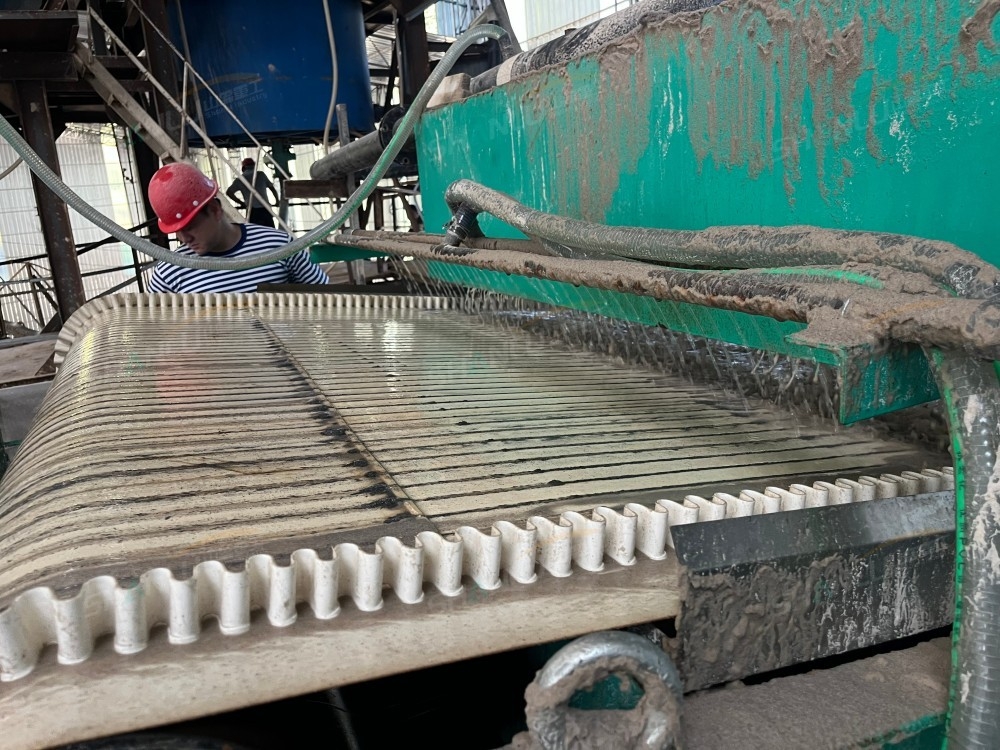
Lab samples are usually dried, while production line materials often exceed the moisture limit. Dry magnetic separation is extremely sensitive to material moisture. In lab tests, samples are generally dried to below 1% first, so the magnetic separation effect is naturally good. But on the production line, materials coming out of the dryer often haven't been fully cooled and dehumidified, and moisture content may fluctuate between 1.5% and 2%. That extra few tenths of a percent of moisture is enough to cause fine powder to clump and adhere to the magnetic roller surface, shielding the magnetic field lines and dropping iron removal efficiency from over 90% in the lab to below 60%. It is recommended to install an online moisture detector before the magnetic separator to ensure the feed moisture content truly meets the standard, rather than judging by feel that it "looks pretty dry."
Lab tests use static or small-batch feeding, while the production line uses continuous dynamic feeding. In the lab, material is spread in a thin layer on the magnetic roller, so every sand grain has a chance to get close to the magnetic pole. On the production line, once the feed rate is scaled up, the layer thickness goes from a few millimeters to over ten millimeters or even thicker, and magnetic particles in the bottom layer are too far from the magnetic roller surface, causing the magnetic force to drop sharply. Lab data reflects separation results under ideal material distribution, but on the production line, if the distributor is slightly uneven or the layer thickness fluctuates slightly, the effect is compromised. It is recommended to install a vibrating distributor before the magnetic separator to keep the layer thickness stably controlled at 5-8mm, and to regularly check whether the distributor is worn and causing material deviation.
Lab tests are often done only once, while production line material properties keep changing. Differences in mining depth, fluctuations in upstream grinding fineness, and even differences in ore surface weathering between rainy and dry seasons can all cause changes in the occurrence state of magnetic impurities in the material. The sample used in that one lab test may happen to be a batch with lower iron content and stronger magnetism, but by the time the production line runs continuously, the material properties have long since changed. It is recommended to take samples for testing once a quarter and adjust the magnetic separator parameters in time according to actual material properties, rather than using one set of parameters all the way through.
Lab data is a reference for equipment selection, not a guarantee of production line results. Leave sufficient margin when selecting equipment, and after commissioning, fine-tune according to actual material conditions, so the magnetic separator can truly deliver its design capability. If you encounter problems during equipment operation, you are welcome to contact the Shanlu Heavy Industry technical team: Manager Zhang 13583776655 (same on WeChat).
label:
Next
related news


E-mail:
Hotline:
cell phone:
Copyright © 2012-2026 Shandong Shanlu Heavy Industry Technology Co., LTD All rights reserved 备案号:鲁ICP备2020040039号
