 简体中文
 English


The magnetic separator's field strength is sufficient, so why is the iron removal effect still poor?
release time:
2026-11-19
During equipment installation and commissioning, a gaussmeter reading showed the magnetic roller surface field strength at 12000Gs—the data fully meets the standard, the manufacturer‘s acceptance passed, and the customer
When installing and commissioning the equipment, a gauss meter measured the magnetic field strength on the surface of the magnetic roller at 12000Gs. The data fully met the standard, the manufacturer's acceptance inspection passed, and the customer was reassured. But after production had run for a while, the iron content of the finished product was always just a little short—no matter how it was adjusted, it could not be brought below the target value. At this point many people begin to suspect that the magnetic material has demagnetized, but retesting the magnetic field strength still meets the standard. Where exactly is the problem?
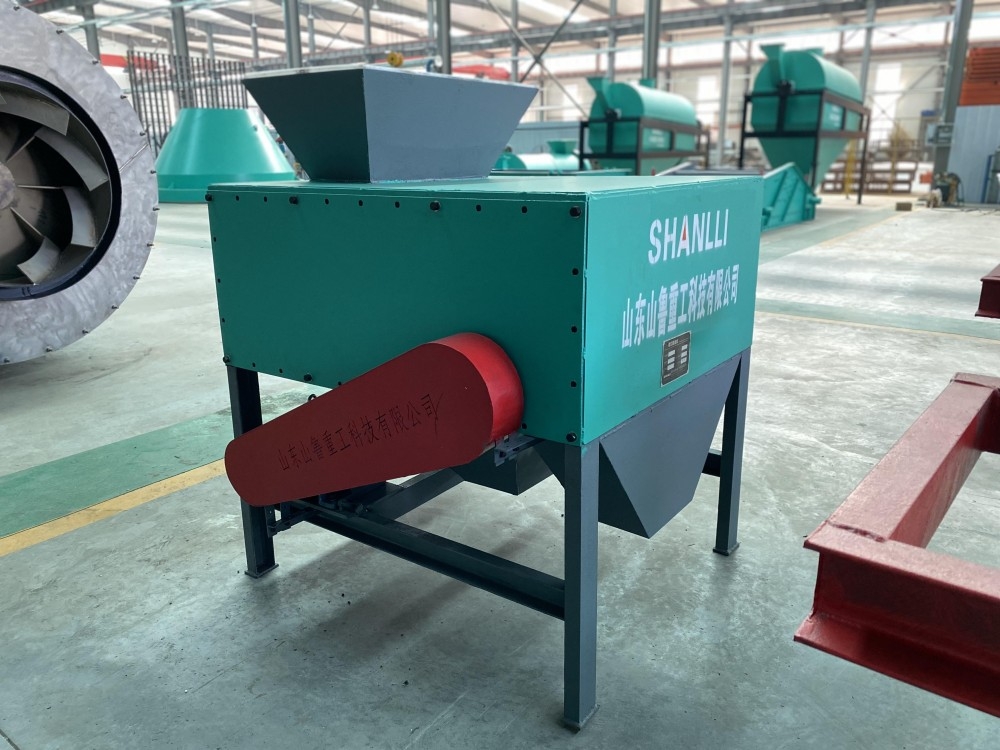
A gauss meter measures the surface of the magnetic roller, but the material "feels" the magnetic field through a layer of material. Magnetic force attenuates extremely quickly with distance; at 5 mm from the magnetic roller surface, the magnetic field strength may be only 30% of the surface value, and at 10 mm it may be less than 10%. On a production line, the material layer thickness is usually 5–10 mm. Material at the bottom of the layer is far from the magnetic roller surface, so the magnetic force it actually experiences is far lower than the surface measurement. In laboratory tests, the material layer is only a thin layer, and every sand grain is close to the magnetic roller, so the effect is naturally good. On a production line, once the material layer is thick, weakly magnetic particles at the bottom cannot be held at all and are discharged directly with the sand. The solution is not to replace the magnetic material, but to reduce the material layer thickness—install a vibratory feeder to keep the material layer stably controlled within 5 mm, and at the same time appropriately reduce the feed rate so that every sand grain has a chance to get close to the magnetic roller surface.
The surface of the magnetic roller appears clean, but in reality there is a layer of "contamination film" invisible to the naked eye. Quartz sand produces a large amount of fine dust during crushing and grinding. This dust gradually deposits on the surface of the magnetic roller, forming a thin powder film. The powder film is not thick, and you may not feel it by touch, but it sits between the magnetic roller and the material, equivalent to increasing the material layer thickness, further weakening the magnetic force. More insidiously, some ore sources contain trace amounts of oily substances, which form an oil film on the surface of the magnetic roller. Fine powder is stuck by the oil and accumulates thicker and thicker, and it cannot be removed at all with a brush during cleaning. It is recommended to wipe the surface of the magnetic roller with anhydrous ethanol or a cleaning agent every shift, rather than only dry-sweeping with a brush. If the surface of the magnetic roller looks oily or feels sticky, it indicates that an oil film has formed and thorough cleaning is required.
The ratio of the magnetic roller speed to the feed rate determines the actual residence time of the material in the magnetic field zone. Many operators only pay attention to whether the magnetic roller speed is normal, while ignoring whether the feed rate matches. When the magnetic roller speed is unchanged and the feed rate is increased, the residence time of the material on the magnetic roller is shortened, and magnetic particles slide past before they can be adsorbed. Conversely, when the feed rate is unchanged and the magnetic roller speed is increased, the material distribution on the magnetic roller becomes thinner but the passage speed increases, which likewise affects the adsorption effect. The correct approach is to adjust the magnetic roller speed and feed rate as a whole, keeping the residence time of the material in the magnetic field zone at no less than 1.5 seconds. In actual adjustment, first fix the feed rate, then gradually adjust the magnetic roller speed, and take samples to test the iron content after each adjustment to find the optimal matching point.
Magnetic field strength meeting the standard is only a necessary condition, not a sufficient condition. The magnetic force actually experienced by the material is the key factor determining the iron removal effect. If you encounter problems during equipment operation, you are welcome to contact the Shanlu Heavy Industry technical team for communication and discussion: Manager Zhang 13583776655 (same on WeChat).
label:
related news


E-mail:
Hotline:
cell phone:
Copyright © 2012-2026 Shandong Shanlu Heavy Industry Technology Co., LTD All rights reserved 备案号:鲁ICP备2020040039号
