 简体中文
 English


Why is the iron still not removed cleanly even though the magnetic field of the plate magnetic separator is normal?
release time:
2026-11-23
The plate magnetic separator is simple in structure and easy to operate in the wet iron removal of quartz sand, but many customers encounter a counterintuitive situation: there is nothing wrong with the equipment itself,
Plate magnetic separators offer simple structure and easy operation in wet iron removal from quartz sand, but many customers encounter a counterintuitive situation: the equipment itself is fine and the magnetic field strength of the magnetic plate measures normal, yet the iron removal effect just doesn't meet expectations. The problem often lies not inside the magnetic separator, but in the installation position—an easily overlooked aspect.
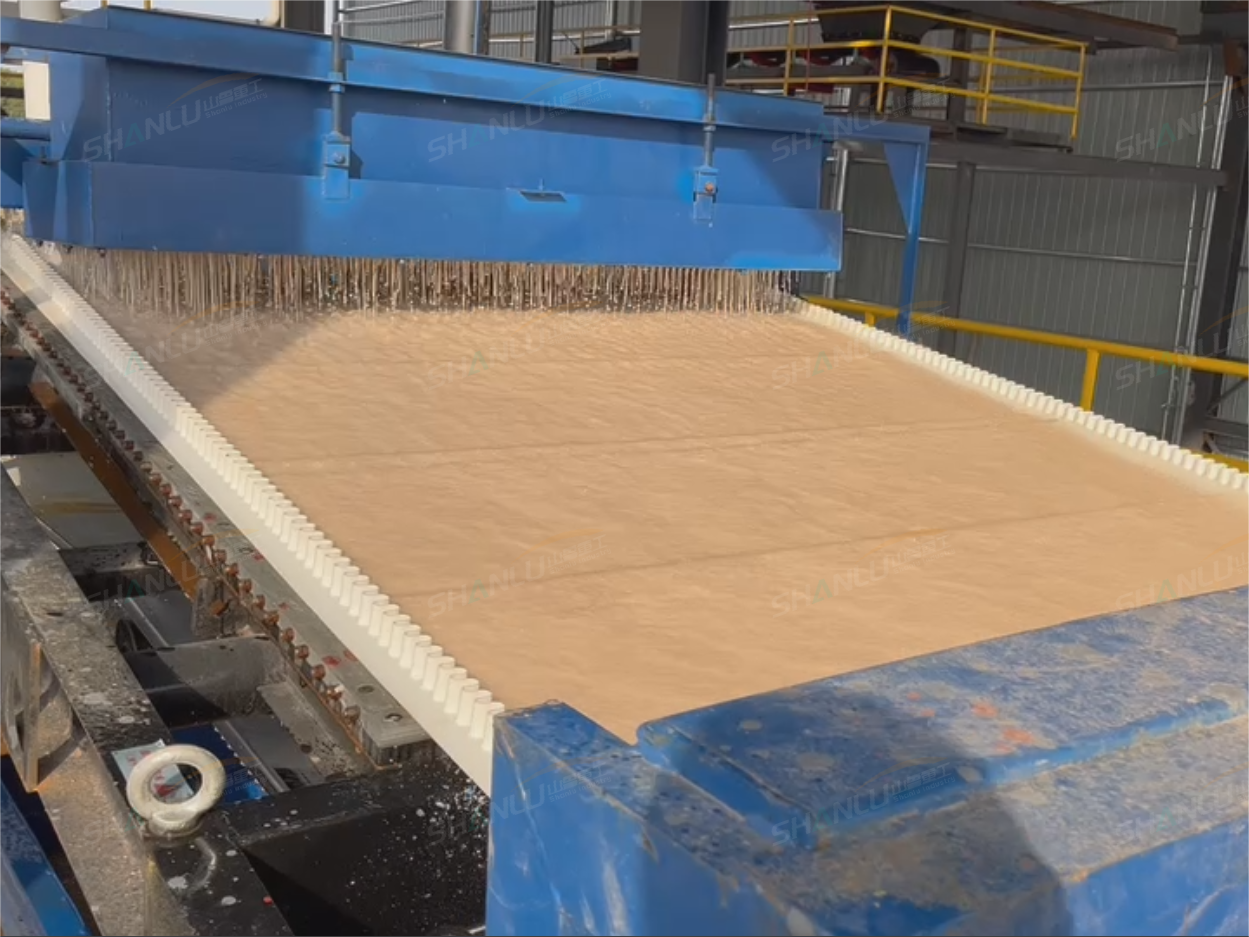
The distance between the magnetic plate and the slurry surface directly determines whether the magnetic field can "reach" the iron impurities. Plate magnetic separators are usually installed in chutes or pipes, with the magnetic plate immersed in the slurry or placed close to the bottom of the trough. During installation, if the gap between the bottom of the magnetic plate and the trough bottom is too large, the bottom-layer material is too far from the magnetic plate when the slurry flows through the gap, and the magnetic force drops sharply. Measurements show that when the gap increases from 5mm to 15mm, the capture rate of the magnetic plate for weakly magnetic particles in the bottom-layer slurry may drop by more than half. During installation, ensure the gap between the bottom of the magnetic plate and the trough bottom is controlled at 3-5mm—avoiding friction while preventing slurry from "short-circuiting" and slipping away along the bottom.
Incorrect installation angle of the magnetic plate and uneven slurry flow velocity distribution also affect iron removal. When the magnetic plate is installed parallel to the slurry flow direction, the slurry flows uniformly over the plate surface, giving magnetic particles sufficient time to be adsorbed. If the plate tilt angle is too large, the slurry flows fast above the plate and slow below it, and magnetic particles in the fast-flow region are washed away before they can be adsorbed. It is recommended to install the magnetic plate horizontally or with a slight tilt along the slurry flow direction, with a tilt angle not exceeding 5°. After installation, measure the flow velocity at various points above the magnetic plate using a flow meter or a water-collection method; if the deviation exceeds 15%, adjust the plate angle or add guide plates.
Insufficient magnetic plate length or too few series stages lets the slurry "flash by." The residence time of slurry on the magnetic plate surface is directly related to plate length and flow velocity. When a single magnetic plate is too short, the slurry may pass over it for only one or two seconds, leaving weakly magnetic particles no time to be adsorbed. For working conditions with large throughput or high iron content, single-stage magnetic separation is often insufficient; it is recommended to connect two stages in series—the first stage for rough separation to reduce iron content, and the second stage for fine separation as a final check. When connecting in series, leave a certain spacing between the two stages of magnetic plates so the slurry has a buffer mixing section in between, preventing iron impurities missed by the first stage from entering the second stage unevenly.
Installation near vibration sources causes long-term vibration of the magnetic plate, leading to loosening of the magnetic system. If a plate magnetic separator is installed near a vibrating screen or feeder, long-term low-frequency vibration may loosen the fixing bolts of the magnetic blocks inside the plate; after the magnetic blocks shift, local blind spots appear in the magnetic field distribution. During installation, keep the equipment as far as possible from strong vibration equipment; if unavoidable, add rubber damping pads to the base of the magnetic separator. Every quarter, use a gaussmeter to measure the magnetic field strength at multiple points along the plate surface; if a certain area is found to be noticeably low, open it up and check whether the magnetic blocks have shifted.
A plate magnetic separator is not something you can just buy and place into a chute to use well—installation gap, angle, number of stages, and vibration-damping measures must all match the on-site working conditions. If you encounter problems during equipment operation, you are welcome to contact the Shanlu Heavy Industry technical team: Manager Zhang 13583776655 (same on WeChat).
label:
Next
related news


E-mail:
Hotline:
cell phone:
Copyright © 2012-2026 Shandong Shanlu Heavy Industry Technology Co., LTD All rights reserved 备案号:鲁ICP备2020040039号
