 简体中文
 English


Why do side plate welds on dewatering screens develop cracks after long-term use?
release time:
2026-10-29
When a vibrating dewatering screen runs continuously in a quartz sand production line, screen frame cracking is a relatively serious structural failure. Cracks mostly appear at side plate welds, crossbeam joints, or near
The vibrating dewatering screen runs continuously in the quartz sand production line, and cracking of the screen frame is a relatively serious structural failure. Cracks mostly appear at side plate welds, crossbeam joints, or near the exciter mounting base. If not detected in time, crack propagation may cause the entire screen machine to be scrapped. The problem usually lies in three aspects: weld quality, stress concentration, and operating load.
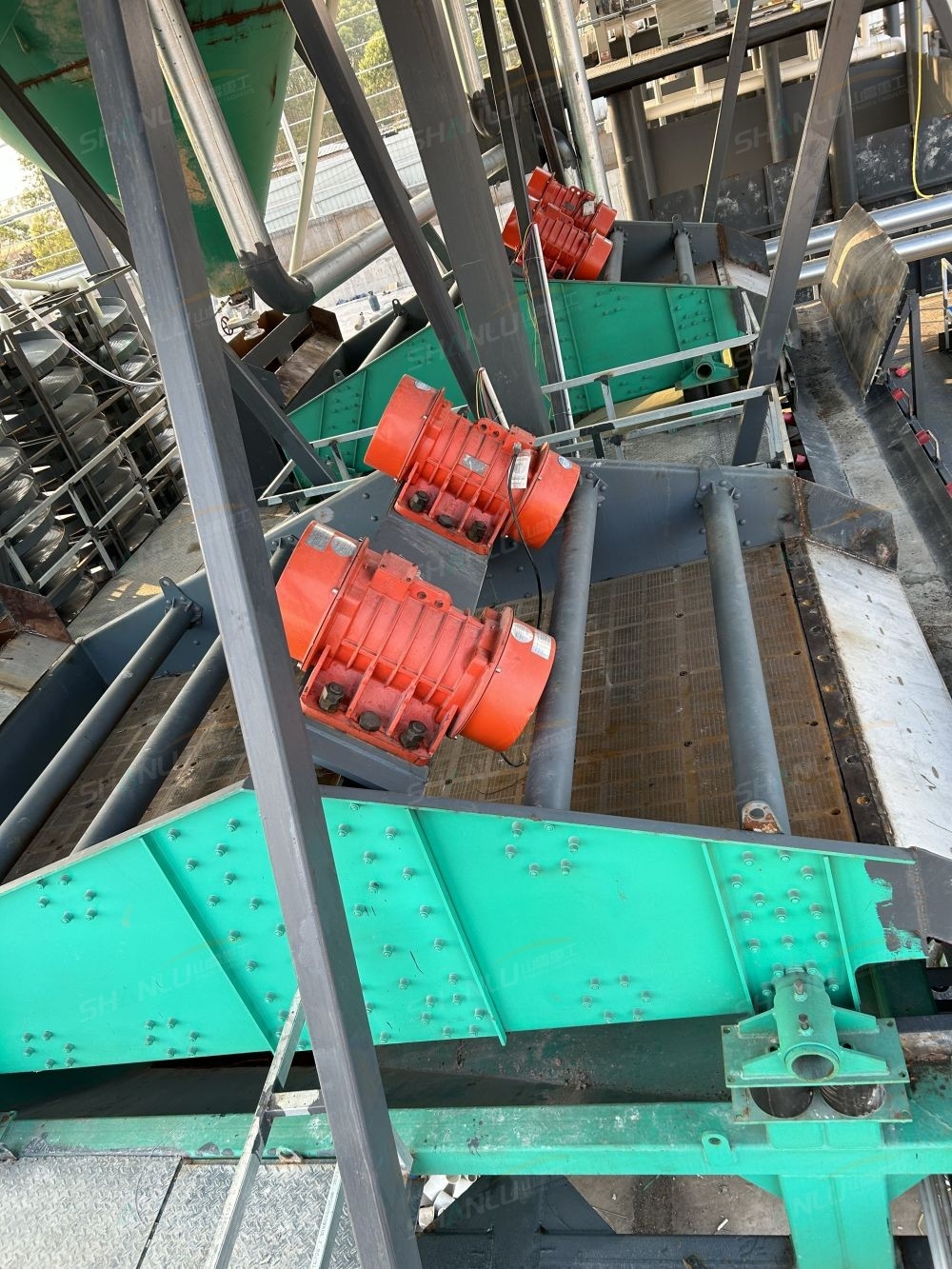
Poor weld quality is the primary cause of screen frame cracking. If the connecting welds between the screen frame side plates and the crossbeam and reinforcing plates have defects such as undercut, porosity, or incomplete penetration during welding, these defects gradually propagate into cracks under alternating vibration stress during operation. During inspection, focus on whether there are rust stains seeping from the weld surface; rust-water marks are often the starting point of cracks. After a crack is found, first use an angle grinder to cut a V-shaped groove along the crack direction, clean it thoroughly, then re-weld, and grind smooth after welding. When repair welding, pay attention to controlling the interpass temperature to avoid excessive heat-affected zones that generate new stress concentration.
Stress concentration can also cause screen frame cracking. Holes, cutouts, or sudden cross-section changes on the screen frame are all sensitive locations for stress concentration. If the transition at the connection between the exciter mounting base and the side plate is not smooth, vibration energy is concentrated and transmitted to that location, and cracks appear over time. It is recommended to weld reinforcing plates at stress concentration locations, and grind the edges of the reinforcing plates into a sloped transition to reduce sudden cross-section changes. During daily inspections, focus on checking these locations for abnormal vibration or unusual noise.
Long-term overload operation will accelerate screen frame fatigue. When the feed rate exceeds the rated processing capacity of the screen machine, the vibration load borne by the screen frame increases, and the metal fatigue rate accelerates. Check whether the operating current exceeds the rated value for a long time; if it exceeds the standard, appropriately reduce the feed rate. In addition, loose anchor bolts of the screen frame will also cause relative displacement between the screen body and the foundation, additionally increasing the torsional stress on the screen frame. Check the tightening of the anchor bolts once a month, and tighten them immediately if looseness is found.
During daily inspections, check the screen frame welds and connection parts once a week, and promptly address any rust stains, cracks, or abnormal vibration found. If you encounter problems during equipment operation, you are welcome to contact the Shanlu Heavy Industry technical team for communication: Manager Zhang 13583776655 (same on WeChat).
label:
Next
related news


E-mail:
Hotline:
cell phone:
Copyright © 2012-2026 Shandong Shanlu Heavy Industry Technology Co., LTD All rights reserved 备案号:鲁ICP备2020040039号
