 简体中文
 English


What causes the crossbeam of a dewatering screen to break?
release time:
2026-11-12
A crossbeam breaking during operation of a vibrating dewatering screen is a relatively serious structural failure. Cracks mostly appear at the weld seams connecting the crossbeam to the side plates or in the middle of th
A crossbeam fracture during operation of a vibrating dewatering screen is a serious structural failure. Cracks mostly appear at the weld joints connecting the crossbeam to the side plates or at the middle of the crossbeam. Once a crossbeam breaks, the overall rigidity of the screen frame drops sharply, the screen surface collapses, and the entire machine is forced to shut down. The problem usually stems from three aspects: weld quality, crossbeam material, and operating load.
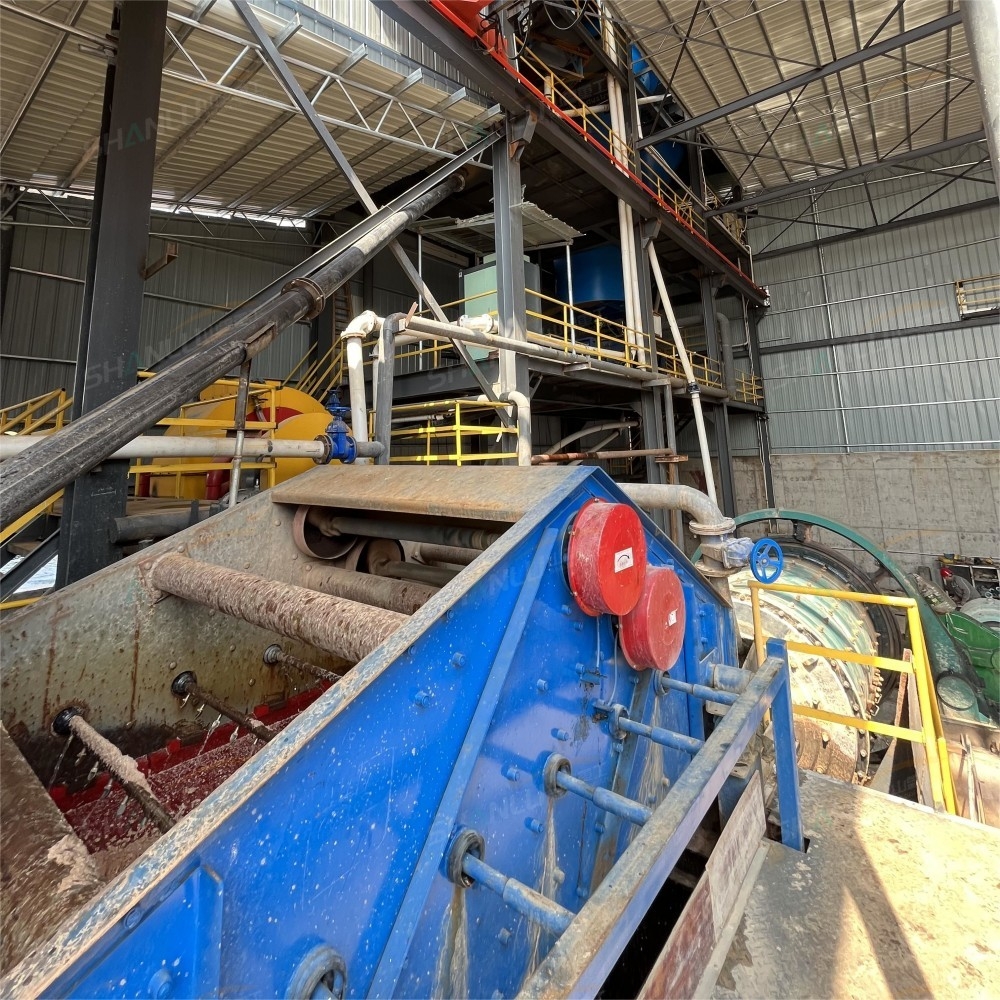
Choosing the wrong crossbeam material or insufficient wall thickness is the primary cause of fracture. Quartz sand has high density and strong feed impact, so the crossbeam bears alternating bending stress over the long term. When the wall thickness of an ordinary carbon steel crossbeam is insufficient, fatigue cracks first appear at the middle where the bending moment is greatest. It is recommended to use Q345B low-alloy steel or wear-resistant steel for the crossbeam, with wall thickness increased by 20%-30% compared with ordinary carbon steel. Do not simply patch-weld a broken crossbeam; calculate the actual load and then re-select the material and fabricate a new one.
Poor weld quality causes the joints to crack first. If the welds connecting the crossbeam to the side plates have defects such as undercut or incomplete penetration, stress concentrates there during operation, and cracks propagate from the weld root. During inspection, focus on whether rust stains are seeping from the weld surface; rust-water marks are often the starting point of a crack. When repair welding, cut a V-shaped groove along the crack direction, clean it thoroughly, weld in layers, grind smooth after welding, and perform stress relief treatment.
Off-center feed impact also accelerates crossbeam fracture. When material continuously falls on one side of the screen surface, the crossbeam on that side bears a much greater impact load than the other side, accelerating local fatigue. Install a distribution plate at the feed inlet of the dewatering screen so that material spreads evenly across the entire screen surface. When the feed rate exceeds the rated processing capacity, the vibration load on the crossbeam increases, so the feed rate should be appropriately reduced. In addition, loose anchor bolts of the screen frame will cause relative displacement between the screen body and the foundation, adding extra torsional stress to the crossbeam. Check the tightness once a month.
During daily inspections, check the crossbeam welds and the middle section for cracks once a week, and address any rust marks or abnormal vibration promptly. If you encounter problems during equipment operation, you are welcome to contact the Shanlu Heavy Industry technical team: Manager Zhang 13583776655 (same on WeChat).
label:
Next
related news


E-mail:
Hotline:
cell phone:
Copyright © 2012-2026 Shandong Shanlu Heavy Industry Technology Co., LTD All rights reserved 备案号:鲁ICP备2020040039号
