 简体中文
简体中文 English

What to Do About Air Leakage at the Inlet and Outlet Ends of a Three-Pass Dryer?
release time:
2025-03-03
After a three-pass rotary drum dryer has been running for some time, seal failure at the inlet and outlet ends causes air leakage, a headache for many customers. Hot air escapes through the gaps, fuel consumption rises,
After the three-pass rotary drum dryer has been running for a period of time, seal failure at the feed and discharge ends causing air leakage is a common headache for many customers. Hot air escapes through the gaps, fuel consumption rises, yet the moisture content of the discharged material cannot be reduced, and on-site dust also increases noticeably.
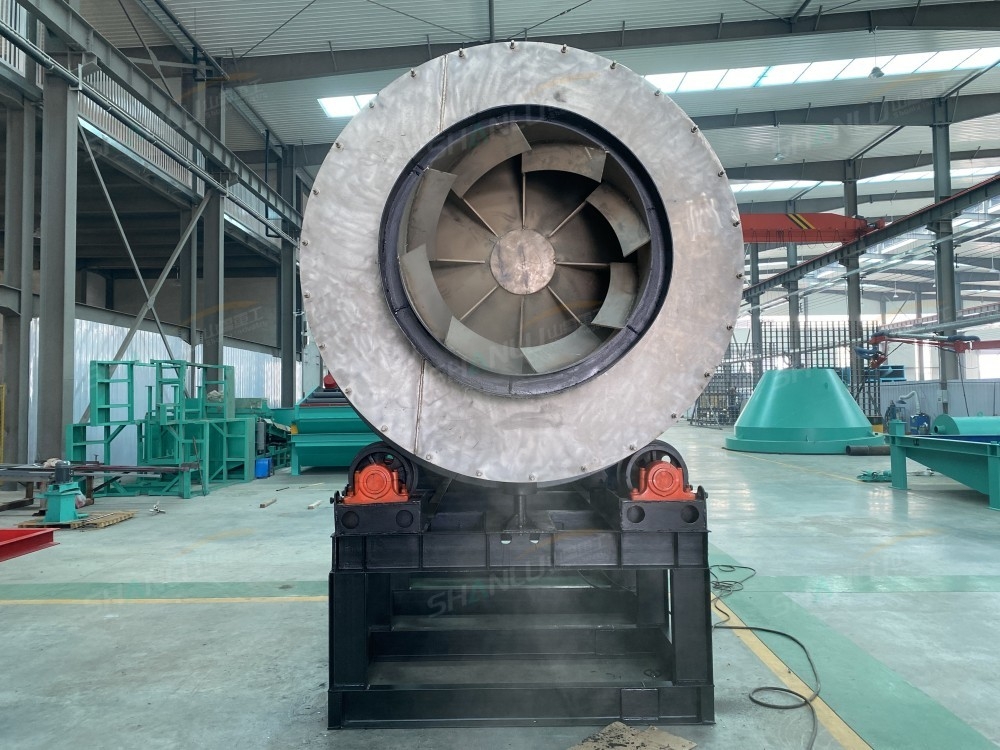
Seal wear is the primary cause of air leakage. The feed and discharge ends of the dryer usually adopt a combined seal of graphite blocks and fish-scale plates. After long-term operation, the graphite blocks wear thinner and the elasticity of the fish-scale plates decreases, creating gaps in the sealing surface. The diagnosis method is simple: after shutting down, shine a flashlight from the outside of the seal. If light can be seen penetrating from the inside, the gap has exceeded the standard and the seal needs to be replaced. Graphite blocks are generally replaced every six months, while fish-scale plates are adjusted or replaced at any time according to wear conditions.
Excessive drum runout will also accelerate seal failure. When the drum riding ring is worn or the support roller position is offset, the drum runout during operation exceeds 2mm, and the seal cannot maintain uniform contact with the drum, causing local gaps to fluctuate. The contact condition of the riding ring and support rollers should be checked once a quarter, and severely worn support rollers should be replaced promptly. When adjusting the support roller position, use a level to calibrate and ensure the drum axis is parallel to the horizontal plane.
Excessively high temperature at the seal also causes accelerated aging of the seal. The temperature at the feed and discharge ends of the three-pass dryer is usually above 100°C, and ordinary rubber seals have a very short service life in such an environment. It is recommended to use high-temperature-resistant graphite packing or ceramic fiber seals, which can withstand temperatures above 300°C. At the same time, a cooling air ring can be installed at the seal to introduce a small amount of cold air to lower the working temperature of the seal.
During daily inspections, pay attention to whether there is dust escaping from the feed and discharge ends, and deal with air leakage promptly when found. In the early stage, air leakage only increases energy consumption, but if left too long, the seal will be completely damaged, making replacement time-consuming and labor-intensive. For equipment operation-related issues, you are welcome to call Shanlu Heavy Industry: Manager Zhang 13583776655 (same on WeChat).
label:
related news


E-mail:
Hotline:
cell phone:
Copyright © 2012-2026 Shandong Shanlu Heavy Industry Technology Co., LTD All rights reserved 备案号:鲁ICP备2020040039号
