 简体中文
 English


What should I do if the drive gears of a three-pass dryer wear quickly and there is abnormal noise during operation?
release time:
2026-11-11
The three-pass rotary drum dryer relies on a large ring gear and a pinion to drive the drum rotation. After one or two years of operation, the tooth surface wear intensifies, the meshing clearance increases, and a period
The three-pass rotary drum dryer relies on a large ring gear and pinion to drive the drum rotation. After one to two years of operation, tooth surface wear intensifies, meshing clearance increases, and a periodic "clicking" sound occurs during operation. In severe cases, stepped grooves or even tooth breakage appear on the tooth surface, forcing the entire dryer to shut down. The problem usually stems from three aspects: lubrication method, ring gear installation accuracy, and support roller adjustment.
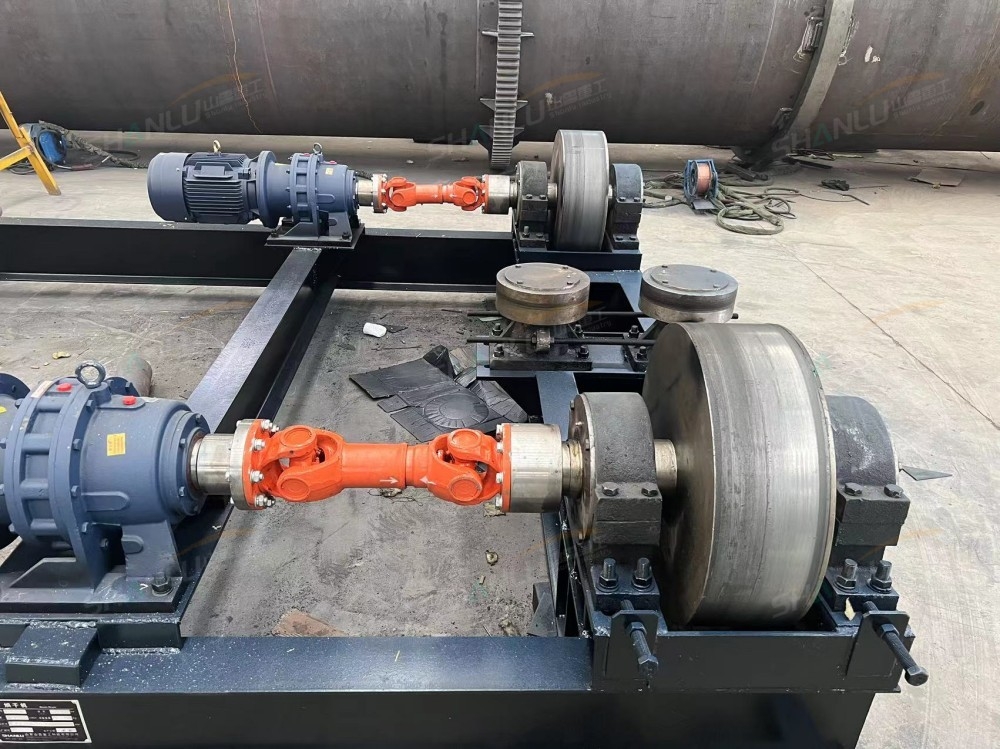
Inadequate tooth surface lubrication is the primary cause of rapid wear. The meshing surfaces of the large ring gear and pinion bear significant contact stress and rely on oil injection or grease application to form an oil film barrier. Incorrect grease grade, offset spray position, or excessively long spraying intervals leave the tooth surface in a boundary friction state for extended periods, multiplying the wear rate. It is recommended to use high-viscosity extreme pressure grease, spray oil once per shift, and aim the nozzle at the meshing surface rather than the tooth tip. Check the oil film coverage on the tooth surface; if the surface is shiny with no oil traces, lubrication has failed.
Eccentric ring gear installation or excessive radial runout accelerates localized wear. The large ring gear is assembled from two halves. When bolts are unevenly tightened or the drum is deformed, the ring gear radial runout exceeds 2mm, causing the tooth surface contact to vary from deep to shallow during operation, subjecting localized tooth surfaces to impact loads. Use a dial indicator to measure radial runout at multiple points around the ring gear circumference. If it exceeds the limit, readjust the splice bolts and positioning pins, and machine the ring gear if necessary. The pinion's parallelism and center distance must also be calibrated, with deviation controlled within 0.5mm.
Improper support roller adjustment causes axial movement of the drum, changing the gear meshing width. If the drum moves back and forth axially during operation, the meshing surface width of the large and small gears varies from wide to narrow, causing uneven tooth surface stress and accelerated localized wear. Check the clearance between the thrust roller and the riding ring, and control the drum axial movement within 1-2mm. Adjust all four support rollers synchronously to ensure the drum axis is parallel to the gear axis.
During routine inspections, listen for gear meshing sounds. When periodic abnormal noise occurs, troubleshoot in the order of "check lubrication first, then measure ring gear runout, and finally adjust support rollers." If you encounter equipment operation problems, feel free to contact the Shanlu Heavy Industry technical team: Manager Zhang 13583776655 (same on WeChat).
label:
related news


E-mail:
Hotline:
cell phone:
Copyright © 2012-2026 Shandong Shanlu Heavy Industry Technology Co., LTD All rights reserved 备案号:鲁ICP备2020040039号
