 简体中文
 English


What should I do if the mud content still won't come down after scrubbing with the scrubbing machine?
release time:
2026-10-20
In quartz sand production lines, the scrubbing machine is responsible for removing surface clay and iron film. However, many customers report that the mud content of the sand remains high after scrubbing, which in turn a
In quartz sand production lines, the scrubber is responsible for removing surface clay and iron film. However, many customers report that after scrubbing, the mud content of the sand remains high, which in turn affects the subsequent magnetic separation and flotation performance. The equipment runs normally and the impeller is not damaged; the problem often lies in the coordination of three process parameters: scrubbing time, scrubbing concentration, and feed particle size.
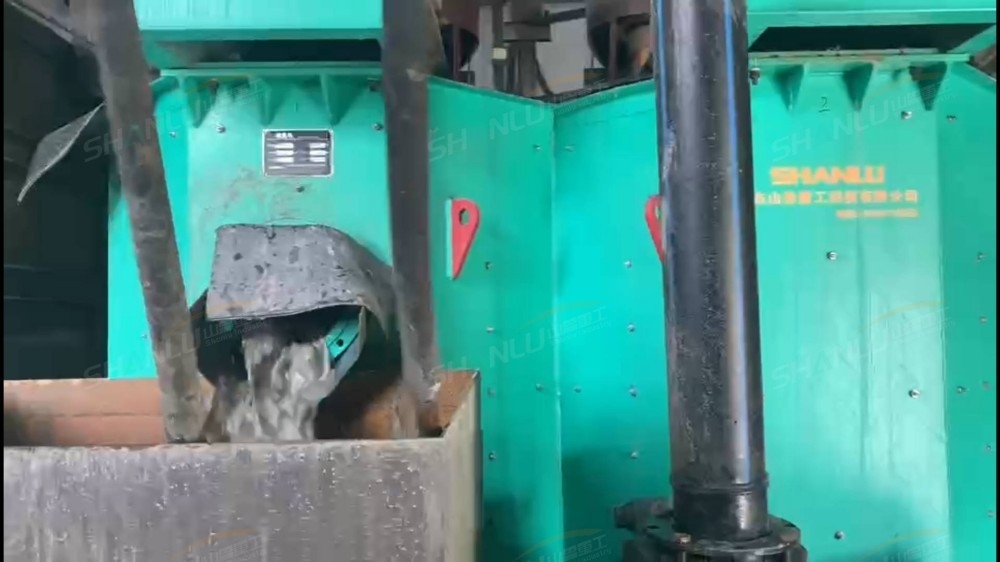
Insufficient scrubbing time: the clay is discharged before it has been stripped off. The scrubber relies on intense friction between sand particles to remove surface attachments, and friction requires time to accumulate. When processing weathered sand with high mud content, if the scrubbing time is less than 10 minutes, the clay minerals do not have enough time to be stripped from the sand particle surfaces and are discharged with the slurry, so the mud content naturally cannot be reduced. It is recommended to adjust the scrubbing time according to the mud content of the incoming material: control it at 10–15 minutes when the mud content is 5%–15%, and extend it to 15–20 minutes when it exceeds 15%. After adjustment, sample and test the mud content once per shift to gradually find the optimal time point.
Scrubbing concentration too low: sand particles do not contact each other. When the scrubbing concentration is below 60%, the spacing between sand particles in the slurry is too large, and the frequency and intensity of frictional collisions are insufficient, greatly reducing the clay stripping effect. When the concentration is too high and exceeds 75%, the slurry viscosity is too high, the impeller load increases, and the material flowability in the tank is poor, which likewise affects scrubbing uniformity. It is recommended to control the scrubbing concentration between 65% and 70% by adjusting the water supply and feed rate. A concentration meter can be installed at the scrubber feed inlet for real-time monitoring; add water appropriately when the concentration is too high, and reduce water supply when it is too low.
Feed particle size too coarse: mud in small particles cannot be washed out. The scrubber achieves the best scrubbing effect on -2 mm material. If a large amount of coarse particles above 5 mm is mixed into the feed, these particles have a small specific surface area and relatively little clay attached to their surfaces, but they occupy space in the tank and interfere with the normal scrubbing of fine particles. It is recommended to install a vibrating screen before the scrubber for pre-classification, retaining +5 mm particles and returning them to the crushing process, while -5 mm material enters the scrubber; the scrubbing effect will be significantly improved.
During routine inspection, test the mud content of the scrubbed sand once per shift. If it is found to remain high, troubleshoot one by one in the order of "first check scrubbing time, then check concentration, and finally check feed particle size." If you encounter problems during equipment operation, you are welcome to contact the Shanlu Heavy Industry technical team: Manager Zhang 13583776655 (same on WeChat).
label:
related news


E-mail:
Hotline:
cell phone:
Copyright © 2012-2026 Shandong Shanlu Heavy Industry Technology Co., LTD All rights reserved 备案号:鲁ICP备2020040039号
