 简体中文
简体中文 English

How to Solve the Fine Particle Entrainment in the Underflow of a Hydraulic Classifier?
release time:
2026-10-10
During the operation of a hydraulic classifier, a large amount of fine powder mixed into the underflow is a common problem. Fine particle entrainment in the underflow not only increases the burden on subsequent dewaterin
During the operation of a hydraulic classifier, a large amount of fine powder mixed into the underflow is a common problem. Fine particles entrained in the underflow not only increase the burden on subsequent dewatering and filter pressing, but also cause the loss of fine-grained products, greatly reducing classification efficiency. The problem usually lies in the coordination between the rising water flow and the spiral rotation speed.
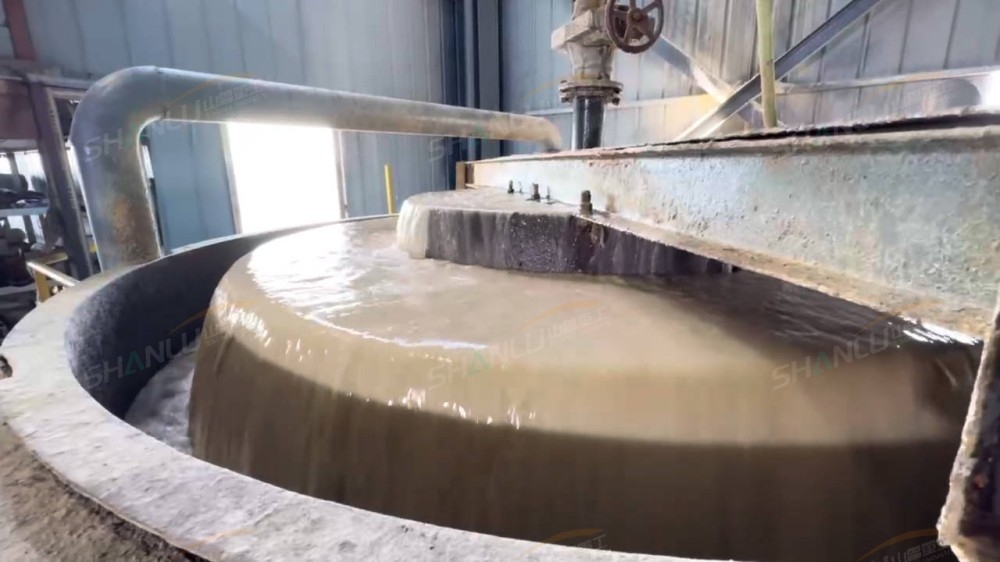
Excessive rising water flow velocity is the primary cause of fine particles entrained in the underflow. When the water flow velocity is too high, fine particles are washed into the underflow before they can settle. You can take a water sample from the middle of the classifier to test the suspended solids content. If it is significantly high, it indicates that the rising water flow is too strong. Close the inlet valve by one notch, observe for 2 hours, and then take another sample until the fine powder content in the underflow drops to a reasonable range. During normal operation, the overflow concentration should be maintained at 10%-15%. If it is below 8%, it indicates that the water volume is too large and a large amount of fine powder is being lost.
Worn spiral blades or improper rotation speed can also cause fine particles entrained in the underflow. After the blade edges wear, the gap between the blades and the tank body increases, allowing some coarse particles to leak into the underflow, while fine particles are carried into the underflow due to the spiral lifting speed being too fast. It is recommended to measure the gap between the outer edge of the blades and the inner wall of the tank once a month. When it exceeds 1.5 times the design value, repair by surfacing welding or replace the blades. Each adjustment of the spiral rotation speed should be controlled within 5 r/min. After adjustment, observe the classification effect before deciding the next step.
An overflow weir that is too low will also worsen fine particles entrained in the underflow. When the overflow weir is too low, the slurry stays in the tank for a short time, and fine particles sink into the underflow before they can float up. Appropriately raising the overflow weir by 50-100 mm extends the settling time and can effectively reduce the fine powder content in the underflow. After adjustment, pay attention to whether the overflow carries coarse particles; both aspects need to be balanced.
During daily inspections, take a sample once per shift to test the underflow fineness. If entrained fine particles worsen, troubleshoot promptly in the order of "first check water flow rate, then check spiral rotation speed, and finally check the overflow weir." For equipment operation-related issues, you are welcome to call Shanlu Heavy Industry: Manager Zhang 13583776655 (same on WeChat).
label:
Next
related news


E-mail:
Hotline:
cell phone:
Copyright © 2012-2026 Shandong Shanlu Heavy Industry Technology Co., LTD All rights reserved 备案号:鲁ICP备2020040039号
