 简体中文
 English


Why does the return material volume of the bucket elevator keep increasing?
release time:
2026-11-27
In the quartz sand production line, the bucket elevator is responsible for vertical conveying. After one or two years of operation, some material at the head discharge point is not thrown out and returns to the base alon
In a quartz sand production line, the bucket elevator is responsible for vertical conveying. After one or two years of operation, some material at the head discharge point is not thrown out and returns along the buckets to the base, forming "material backflow." As the amount of backflow increases, conveying capacity drops noticeably, and material accumulates higher and higher at the base. Cleaning frequency goes from once a week to once per shift. The problem is usually not with the buckets themselves, but with the match between drive speed and discharge port position.
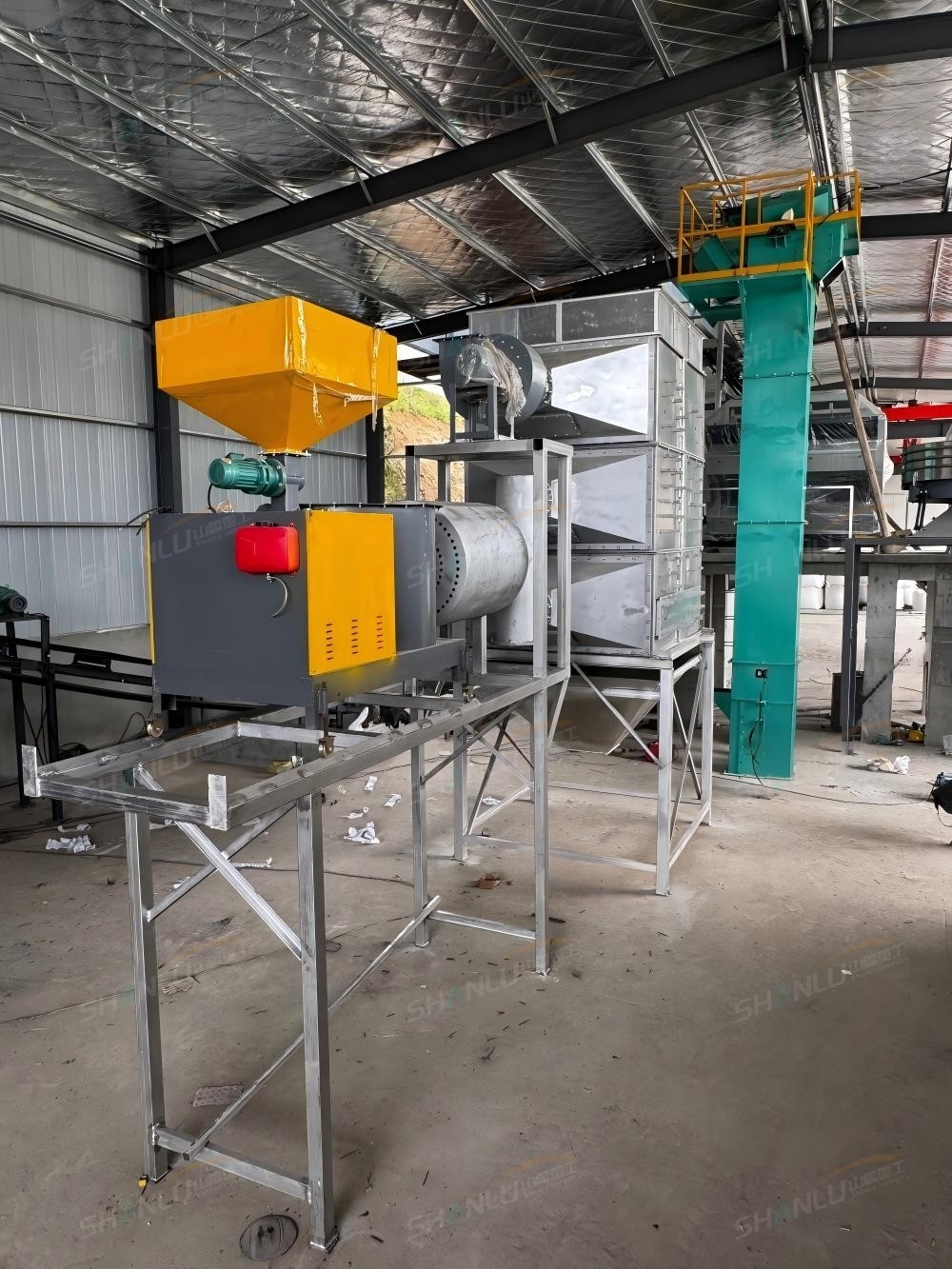
The elevator's linear speed is insufficient, so the material cannot be thrown out. A bucket elevator relies on the centrifugal force generated by the rotation of the head pulley to throw material out of the buckets. When the speed is insufficient, the centrifugal force is not enough; the material only slides down slowly as the bucket turns over, and some wet material adhering to the bucket wall does not have time to fall off before it rotates back down with the bucket on the descending side. Check whether the drive motor pulley is worn and causing a speed drop. Measure the actual linear speed of the head pulley with a tachometer; if it is below the design value, replace the pulley or adjust the inverter output. Typically, the linear speed of a bucket elevator for quartz sand is between 1.2 and 1.6 m/s; for fine powder materials, use a value toward the higher end.
The discharge port is positioned too low or the guide plate angle is incorrect, so the thrown material hits back into the buckets. The discharge port should be set in the tangential direction of the material's throwing trajectory. If the position is too low, the material hits the inner wall of the casing after being thrown and bounces back into the buckets; if the guide plate angle is too steep or too shallow, material accumulates on the guide plate and overflows back. Check the relative height between the discharge port and the head pulley, and if necessary adjust the discharge port position or add a guide baffle to guide the thrown material smoothly into the discharge chute.
After the buckets wear, their volume decreases and the fill factor drops. When the bucket lip becomes thin and deformed from wear, the loading amount decreases, and at the same time material adheres more severely to the worn bucket wall during discharge. Replace buckets when wear exceeds one-third of the original volume; use wear-resistant steel or attach wear-resistant ceramic tiles to the inner wall. When the amount of backflow suddenly increases, first measure the speed, then adjust the discharge port, and finally check bucket wear—this is more effective than blindly replacing the entire machine. If you encounter problems during equipment operation, you are welcome to contact the Shanlu Heavy Industry technical team: Manager Zhang 13583776655 (same on WeChat).
label:
Next
related news


E-mail:
Hotline:
cell phone:
Copyright © 2012-2026 Shandong Shanlu Heavy Industry Technology Co., LTD All rights reserved 备案号:鲁ICP备2020040039号
